
From Aisles to Algorithms: How CRM Studios Helped Pioneer Content Marketing — And How a Systemized Strategy Drives Growth Today
By Shawn Fernandez, Content Strategist at CRM Studios
Same Purpose, New Pipes
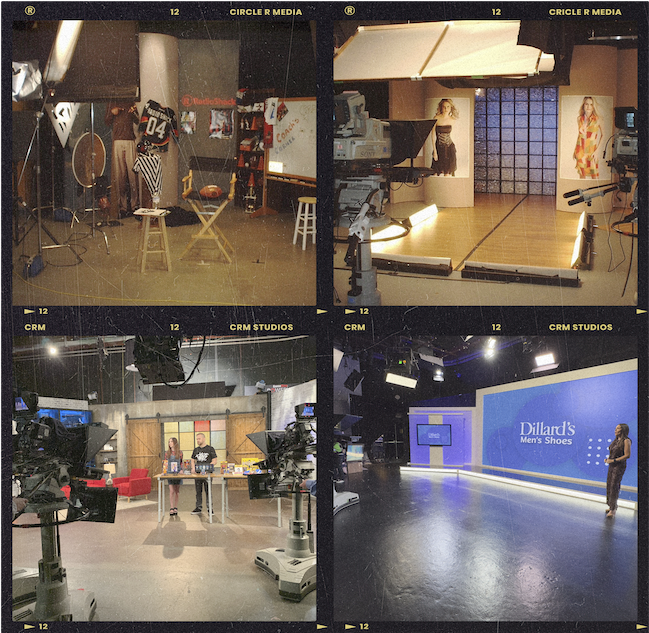
If you strip away the platforms and the jargon, marketing has always been about this: help the right person make a confident decision. In the 1990s and early 2000s, our team lived that principle in a very literal way. Back when CRM Studios was still Circle R Media inside RadioShack, we planned, produced, and programmed short, useful video segments that played on screens across thousands of stores. They were designed to educate, answer questions, and prompt the next step at the exact moment of choice.
We didn’t call it “content marketing.” We called it programming. The mission was the same then as it is now. Be helpful. Be relevant. Be consistent. Deliver a clear next step.
That editorial discipline is our DNA. Today the distribution looks different. The shelf has become the feed. The loop has become a weekly lineup. The satellite dish has become YouTube, LinkedIn, OTT, and email. Yet the work is the same: create valuable content for a defined audience, publish on a cadence, and measure behavior change that matters to your business. This forms the core of a strong content marketing strategy brands trust to grow their owned media channel.
Our Origin Story: Programming Before “Content” Was Cool
Inside RadioShack, Circle R Media built a private, satellite-fed network that ran bite-sized educational segments, product how-tos, and timely features. Those pieces did more than “sell.” They reduced confusion at the point of decision. They made technical products feel approachable. They gave customers a reason to trust what they were about to buy.
When we evolved into CRM Studios, we carried that showrunner mindset into new retail networks and brand channels. GameStopTV became a national in-store channel, mixing developer interviews, previews, and integrated spots. In many cases, a third-party network operator handled ad inventory and placement while we focused on what we do best: original host-driven programming, editorial planning, and production that feels like a show rather than a commercial. It was a collaboration that let each partner do what they were built to do. The editorial spine was familiar: be helpful, be timely, be native to the environment. The result was a better viewer experience and more meaningful sales moments.
The lesson that still serves our clients today is simple. Treat your brand like a channel, not a billboard. Plan episodes. Feature real expertise. Show, don’t just tell. Distribute consistently. Measure the right outcomes. This system-oriented approach is what enables a modern video content system—whether for B2C/B2B video marketing or corporate training video production.
Why This Matters Right Now
Your customers do not wake up wanting another ad. They wake up with questions, projects, risks, and deadlines. They are searching for clarity. Brands that provide that clarity win more trust and shorten the path to “yes.”
That is why the playbook that worked on a store loop still works across digital channels. For example, a smart retail media strategy can leverage content marketing and video to close the gap between question and decision. A weekly series on YouTube or LinkedIn can mirror the in-store rhythm. Education reduces friction. Proof builds credibility. Timely perspective helps buyers make sense of trade-offs. The audience learns to expect a steady diet of useful episodes, and you earn attention by delivering every week.
Content marketing isn’t only outward facing; corporate training is the same discipline aimed inside your company. Developing a video content system for corporate training video is just as crucial as creating external owned media channels. Whether you are speaking to ideal clients or equipping your teams, the framework does not change. Create and distribute valuable, relevant, and consistent content to a clearly defined audience to drive profitable action. Externally, that action looks like awareness, trust, and purchase. Internally, it is alignment to your vision and mission, faster onboarding, fewer errors, stronger compliance, and a more consistent customer experience. Treat training like a channel with clear ownership, cadence, and metrics, and it will compound the results of your external program.
The best content marketers in Dallas not only serve client-facing campaigns, but also orchestrate internal video content systems that scale across teams.In other words, the companies that treat content as a system rather than a set of one-offs are the same companies that win more deals and scale more predictably. A focused video marketing program is one of the highest-ROI vehicles for sustained growth.
Addressing the Hard Question With Nuance
It is fair to ask: if helpful programming is so effective, why did some legacy retailers struggle? The honest answer matters for your strategy.
Some brands faced headwinds that content alone cannot fix. Macro disruption beat store-first models. RadioShack’s challenges were structural and strategic: overextended store footprints. Margin pressure from category shifts. Leadership changes that pulled in different directions. No volume of educational content can overcome a broken business model or secular category shifts. Content multiplies a sound strategy; it cannot replace one.
Category behavior changed. In video games, purchasing migrated from discs to digital downloads and subscriptions, undercutting the advantages of physical retail. GameStop has pivoted repeatedly as store counts have contracted, reflecting that shift in buyer behavior—not a repudiation of helpful programming at the shelf. The takeaway for modern marketers: align your content with where and how customers buy now. This is where a tailored retail media strategy powered by content marketing can make the difference.
And note this: we’re still here, precisely because the discipline scales across categories and channels. What began as corporate TV has become a modern system for brand education, proof, and perspective—applied to digital platforms where decisions are made today.
Content is not a miracle cure. It is a multiplier. When your strategy is sound and your offer fits the market, useful content accelerates learning, increases confidence, and makes every other channel work harder. When the business model is under structural pressure, content can still improve outcomes, but it cannot reverse macro trends on its own.
Here is the key takeaway for modern leaders. Your video content system should be part of your owned media channel strategy—aligned with buyer journeys and digital habits. Align your content system with how your buyers actually buy today, and let data refine it every week. Meet them where they research and decide. Instrument each episode and page for performance in retention, click-through, assisted conversions, pipeline created or influenced, sales-cycle time, and win rate. Pair those signals with qualitative feedback – comments, saves, shares, replies, sales notes, etc. Then adapt quickly: tighten hooks, clarify examples, adjust offers, and shift distribution to the channels your audience has proven they prefer. Feedback is the compass that reveals what truly matters and resonates; measuring and iterating is how helpful programming becomes a reliable growth system.
Instrumentation isn’t a ‘nice to have’; it’s how your audience tells you what to make next.
The Highest-Leverage Content You Can Publish: FAQs and Objections
Objections are not roadblocks. They are questions in disguise. When you answer them in public, you build trust faster and shorten the buying journey.
Make this practical. Gather questions from sales calls, chat transcripts, proposal redlines, and lost-deal notes. Prioritize the ones that stall deals and create doubt. Then build concise, visual assets that answer each one with radical usefulness. Use plain language. Offer ranges and timelines. Acknowledge trade-offs. Show how you mitigate risks. Point to the first 30 to 90 days so buyers can picture success.
Place these answers where decisions are made. On pricing and plans pages. On product and service pages. In comparison content. In onboarding guides. Pair each answer with a 60 to 90 second video, a short text explainer, one customer proof point, and a clear next step. Track what matters: retention on these sections, demo requests that originate from them, opportunities created, sales-cycle days removed, and win rate. You will see the compounding effect quickly. Helpful answers reduce hesitation. Reduced hesitation increases momentum.
This approach is not about “handling objections” with clever wording. It is about demonstrating empathy and competence at the exact moment your buyer needs both. People do not buy only when they understand you. They buy when they feel understood.
The Modern Playbook: From Store Loop to Weekly Lineup
Below is the same operating system we ran on screens in the aisle, adapted for the point of scroll. It is systemized by design. You can run it with a small team and scale it without losing quality.
1) Define Your Channel’s Pillars
Choose three pillars that map directly to revenue:
- Education. Explain problems, show workflows, reduce friction.
- Proof. Capture genuine customer moments, before-and-after, real screens and real results.
- Perspective. Offer timely context so buyers can weigh trade-offs and choose with confidence.
These pillars give your audience a predictable experience and give your team a repeatable structure.
2) Program the Season
Think in 90-day blocks. Outline three-twelve episodes that ladder to one commercial outcome. Each episode should answer one meaningful question and point to one clear next step. Avoid kitchen-sink scripts. The point is focus and momentum.
3) Produce on a Cadence You Can Keep
Batch production either once a month or every quarter. Keep your set consistent. Light and frame that exemplifies your brand’s unique culture and vibe. Capture the A-roll with polish and build a library of B-roll that can be reused across the season. Edit with templates that protect brand consistency without creating sameness.
4) Publish Where Your Audience Already Is
Pick a primary home, usually YouTube or LinkedIn. Publish one long-form episode either once a month, twice a month, or once a week. Cut three to five shorts from each episode for secondary channels. Use end cards and pinned comments to guide the next step. Send a simple email that packages the key takeaway and invites the next action. Repurpose the episode as a blog article for discoverability and long-tail SEO.
5) Measure Behavior, Not Vanity
Views and impressions are a weather report. Useful, but not the game. Track retention curves. Click-through to owned pages. Assisted conversions from the series. Opportunities created or influenced. Sales-cycle duration and win rate for prospects who consumed the series versus those who did not. This is how a content channel earns budget and trust inside your organization.
Corporate Training as an Internal Channel
The same system improves internal performance. A training series that runs on a schedule, speaks in your brand voice, and is designed for real-world use will align teams faster than ad hoc decks and town halls. Create a quarterly training lineup that covers the most common gaps: onboarding, product updates, positioning, security, compliance, and the customer experience you want to deliver. Measure time to proficiency, error rates, policy adoption, and customer satisfaction. When training behaves like a channel, you get a more consistent brand on the outside because your people are more consistent on the inside.
This isn’t theoretical, it’s operational in large, distributed organizations.
A practical example: Dillard’s, a perennial Top 100 U.S. retailer, has partnered with CRM Studios for nearly 20 years as a fundamental part of its regional and corporate training programs—proof that a systemized content channel isn’t just outward-facing marketing; it’s an internal performance engine, too. Content doesn’t single-handedly make a retailer successful, but it’s a durable asset in the operating model: it aligns teams quickly, scales education, and helps stores execute seasonal priorities with consistency. Dillard’s continued scale—$6.2–$6.5B in annual retail sales—underscores the point: when training is treated like a channel with cadence, ownership, and metrics, it compounds results across the business.
When training behaves like a channel, the front-of-house experience becomes more consistent because the back-of-house is aligned.
A 90-Day Plan You Can Start Now
Month 1. Design the channel. Choose the audience, the decision you want to speed up, and the three pillars that will serve that goal. Outline the season. Align on voice, set, and visual identity. Draft titles that are clear and search-friendly. Map each episode to an owned page with a single next step.
Month 2. Produce a sustainable rhythm. Record two-four episodes per batch day. Capture B-roll that can serve across topics. Edit in a repeatable format. Create the shorts. Prepare thumbnails and copy that set the right expectations. Build your email and blog templates so distribution is one click, not a scramble.
Month 3. Publish, learn, and optimize. For the fastest ROI, ship one long-form episode every week. If weekly isn’t realistic, go every other week or even once a month. It still works, it just takes longer to build momentum. Publish shorts natively on the platforms your buyers actually use. Add chapters and end cards. Use UTM links so you can track what each video drives. Meet weekly to review where viewers drop off and what questions they’re asking next. Tighten your hook. Clarify your CTA. Let the data fill your backlog with exactly what to make next.
By the end of 90 days, you will not only have a library of assets. You will have a working system that gets easier and more effective over time. Your video content system will fuel both internal corporate training video and external B2B/B2C video marketing, driving an integrated retail media strategy and maximizing your owned media channel.
Why CRM Studios
We started when this work ran on satellite, not social. That forced us to think like showrunners. It pushed us to design formats that respect the viewer’s time. It taught us to measure the moments that matter. Today, we bring the same craft to B2B and complex B2C brands that need more than attention. They need trust, clarity, and an engine that builds both on purpose.
We operate in Dallas and Shreveport and serve clients across the country. If you’re seeking a partner in content marketing Dallas companies endorse, our team brings deep experience in creating custom video content systems that scale.. We meet you where you are. If you have a clear vision, we will bring it to life with flawless execution. If you have goals but no roadmap, we will design the system with you. If you need a repeatable engine, we will build a strategic video content system with monthly planning, batch production, multi-platform optimization, and performance tracking that proves the investment.
Helpful programming is not nostalgia for us. It is our operating system. It is how we help you stop guessing and start growing with confidence.
If You Are Ready To Turn Your Brand Into a Channel
Let’s design your first quarter of programming. We will align pillars to your revenue goals, draft the first eight to twelve episodes, and build an Objection Library that answers the questions your buyers worry about most. We will set up the cadence, the templates, the measurement, and the distribution so your content works 24/7 and your team can focus on the conversations that count.
Call to action: Start with a 45-minute working session. We will map the decisions you need to accelerate and the content that will do it. You will leave with a simple plan and a clear next step.